Why Screen Time Limits Are Easy to Ignore
Learn why basic screen time limits often fail and how movement-based blocking can make app limits harder to bypass.
Why Screen Time Limits Are Easy to Ignore
Screen time limits sound good until the moment you hit one.
You get the alert. You tap ignore. You add 15 more minutes. Then another 15. Suddenly the limit exists, but it does not actually change your behavior.
This is why many people need more than a timer.
The problem with normal limits
Basic screen time limits fail for three reasons:
- They are easy to dismiss.
- They do not replace the habit.
- They depend on willpower at the exact moment willpower is weakest.
When you are tired, bored, stressed, or avoiding work, a soft limit is usually not enough.
App blocking needs a replacement behavior
A good app blocker should not only say “no.” It should answer: “What should I do instead?”
LimitFit answers with movement.
Instead of opening a blocked app immediately, you get a clear requirement:
Walk 500 steps to unlock.
That creates a healthier loop:
Urge → block → movement → unlock → intentional use
Why walking works well
Walking is simple, accessible, and measurable. You do not need a gym, equipment, or a complicated workout plan.
A short walk can also break the automatic loop of opening apps without thinking.
Better than guilt-based blocking
Many screen time tools make users feel guilty. LimitFit should avoid that. The tone should be firm but encouraging.
Instead of:
You failed. Stop using your phone.
LimitFit should say:
342 steps left. You’re close.
That makes the app feel like a coach, not a punishment.
Example: replacing doomscrolling
Without LimitFit:
- Feel bored
- Open TikTok
- Scroll for 45 minutes
- Feel worse
With LimitFit:
- Feel bored
- Open TikTok
- See blocked screen
- Walk 500 steps
- Decide whether TikTok is still worth it
Sometimes you will unlock the app. Sometimes the urge will pass. Both are wins.
Frequently asked questions
Are screen time limits useless?
No. Screen time limits can help, but they are often too easy to ignore. Movement-based blocking makes limits more active.
Does LimitFit block every app?
No. LimitFit is designed to block selected apps. You choose what gets limited.
Is this only about productivity?
No. LimitFit is about healthier phone habits, more movement, less doomscrolling, and better self-control.
Bottom line
Screen time limits fail when they rely only on willpower. LimitFit makes limits stronger by requiring movement before access.
Related articles
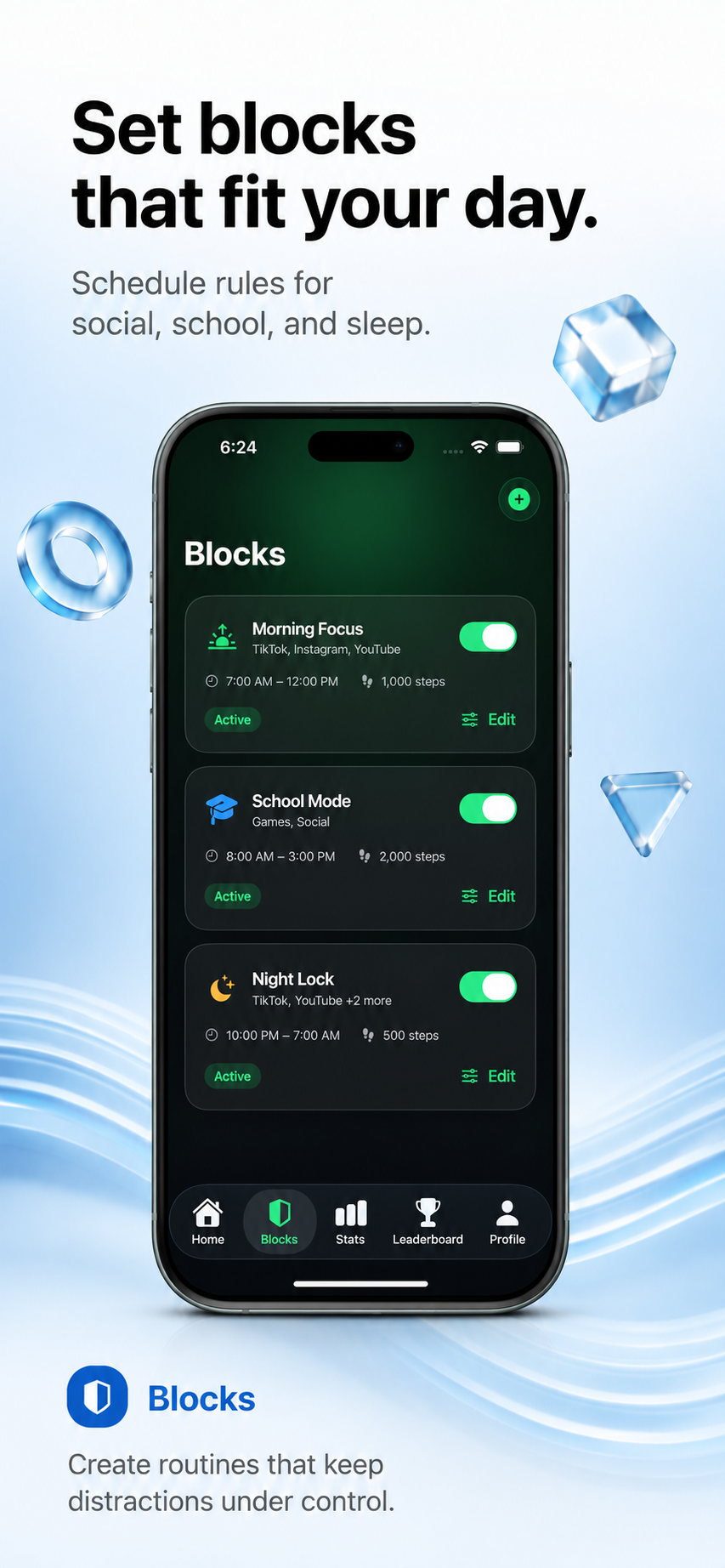
How to Block Apps Until You Walk on iPhone
Learn how step-based app blocking works on iPhone and how LimitFit helps you earn screen time by walking.
Read article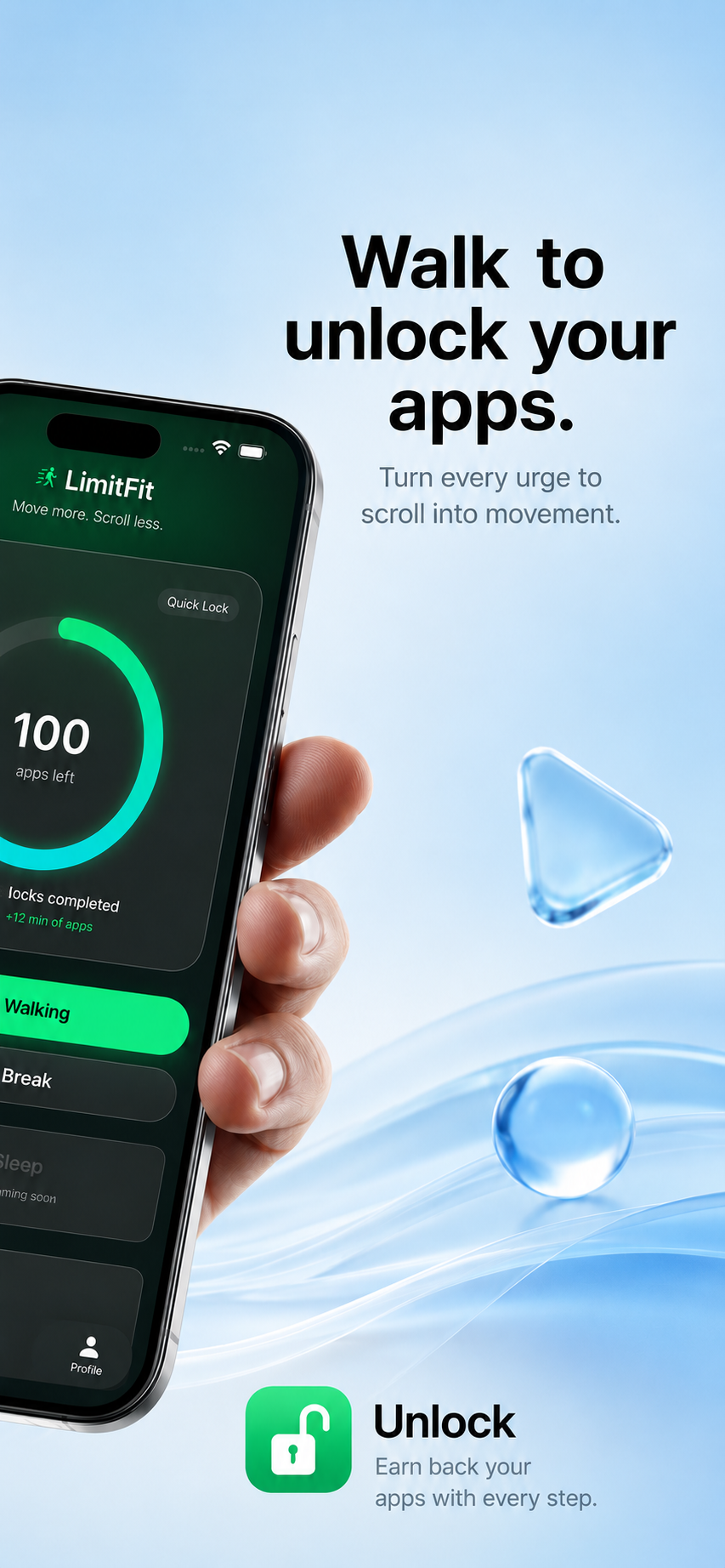
How to Stop Doomscrolling With a Step Goal
A simple guide to using step goals to stop doomscrolling and build healthier screen time habits.
Read article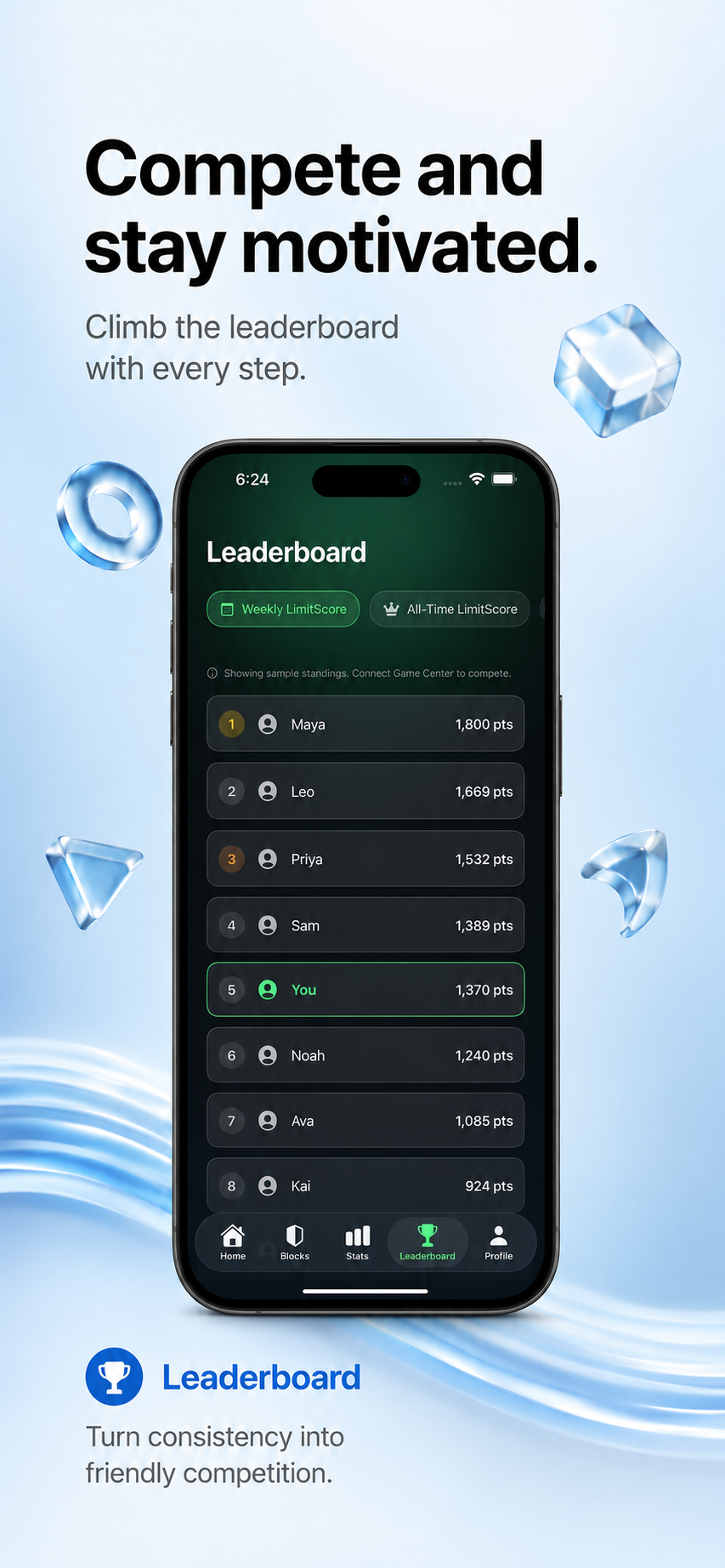
LimitFit vs Opal: Which Screen Time App Is Better?
Compare LimitFit and Opal for screen time control, app blocking, focus sessions, step goals, and reducing distractions.
Read article